Thingiverse, Printables, MakerWorld… which one is better?
If you start looking for 3D models without a plan, it’s very easy to go from “I’m going to look for one thing” to “I have 30 downloaded models I’ll never print.” It’s very easy to become an STL collector who never actually prints anything.
When you’re looking for 3D models, you’re not simply choosing a website — you’re choosing different models that fit what you want to make.
In our 3D printing workshops, the first thing we teach is that each platform has its own character. Rather than thinking about “the best one,” it helps to think about which one fits the way you use your printer right now.
Very briefly, and mixing in a bit of what you see in the community:
- Thingiverse → the endless classic: it has everything, but it can be chaotic.
- Printables → a more polished feel, an active community, more curated content.
- MakerWorld and the like → newer, more experimental energy.
Thingiverse: The Giant Storage Room
Thingiverse has been a reference point for so many years that, as its name implies, it has a bit of everything. You can find anything from a baby Yoda to a labyrinth gift box.
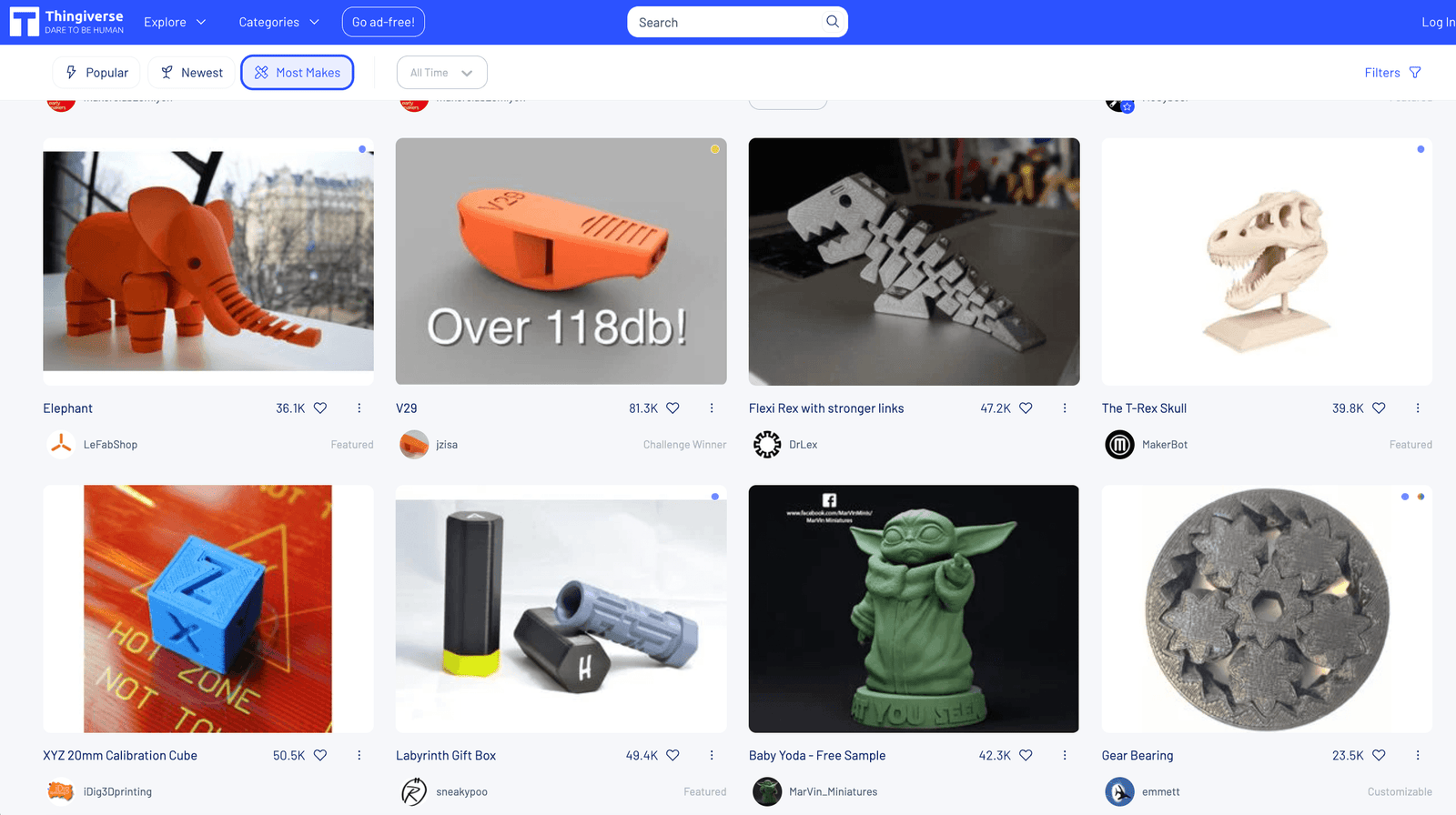
The good: someone has probably already uploaded something similar to what you want. With such a large database, it’s very hard not to find what you’re looking for.
The not-so-good: very inconsistent quality, and at times maddening organization.
It’s like a shared storage room: there are treasures, and there are things nobody remembers why they’re there.
Printables: Less Noise, More Intention
Printables tends to have a slightly more curated atmosphere. On this platform, you’ll find models you can use in your everyday life, like a folding fan or a box stool. There are challenges, points, and feedback systems, and people take more care with what they upload. It has a very strong community, where you can take part in different challenges and contests, but also learn by sharing and from those who share.
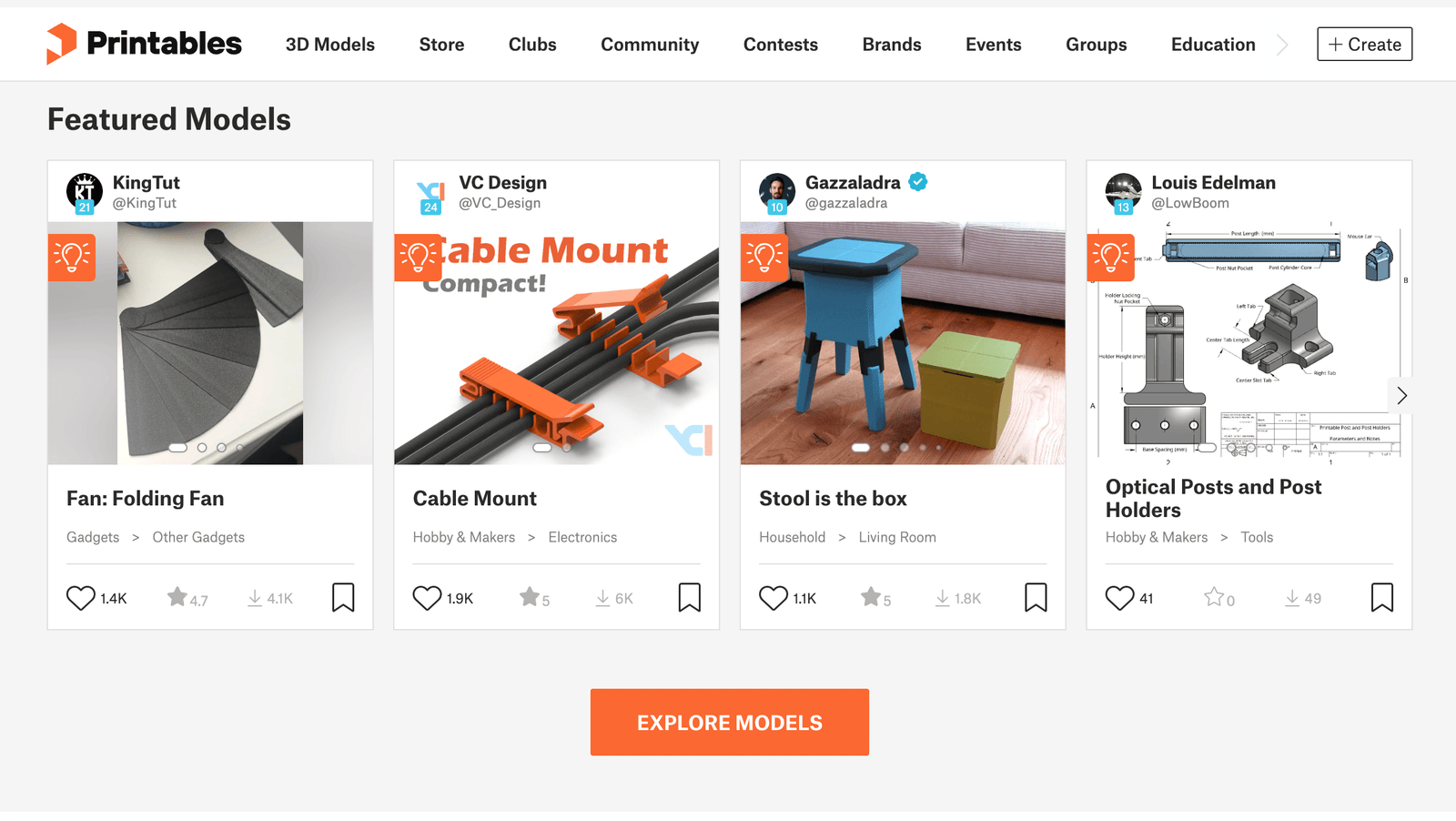
If you want models that are generally a bit more refined and chaos overwhelms you, it can be a good home base.
MakerWorld and Experimental Spaces
Then there are the newer platforms like MakerWorld, etc. — new experimental spaces that are in “lifelong beta” mode. You can print things like a spa for your canary or different kinds of keychains.
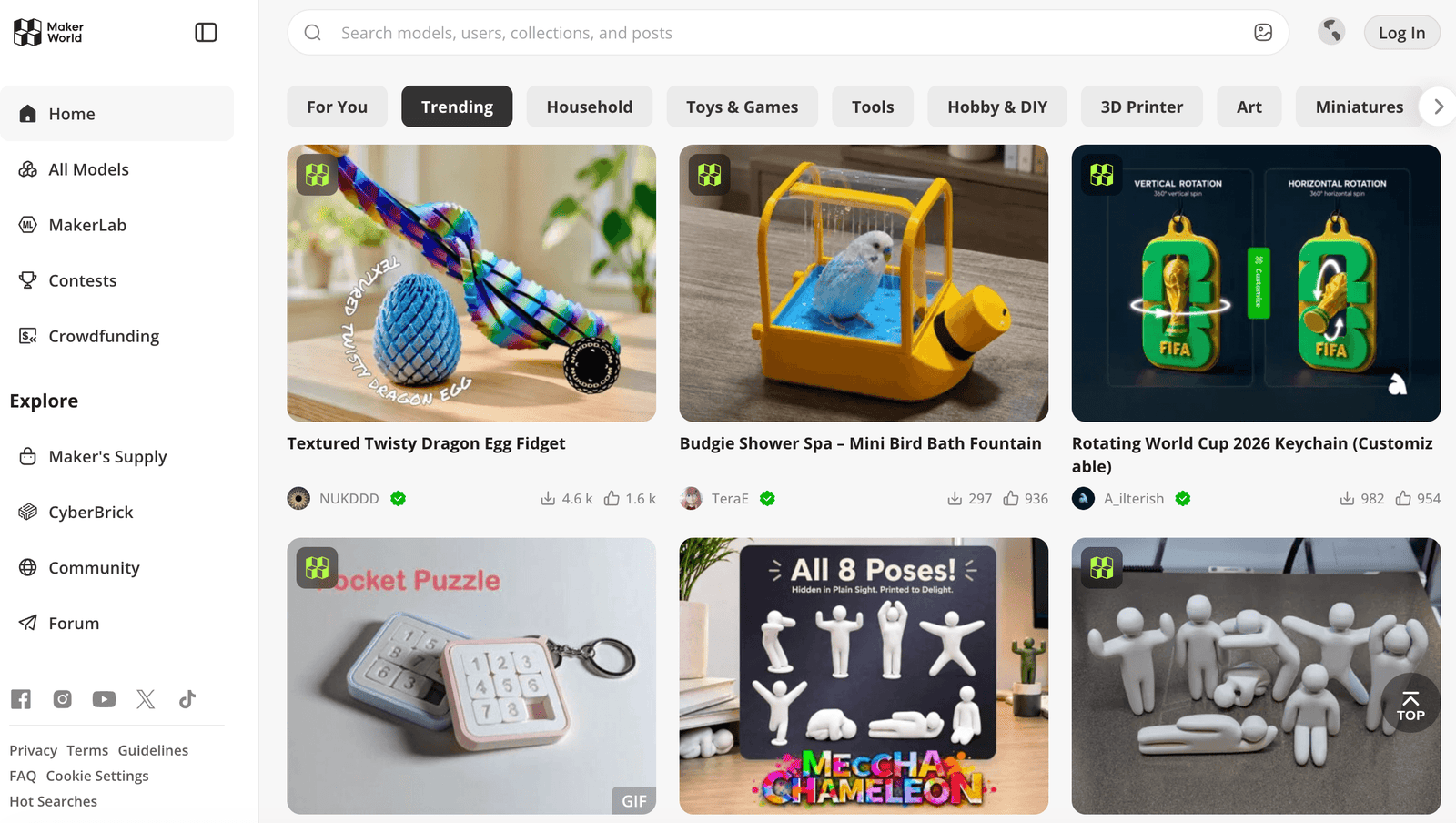
They move fast, try different things, and attract people eager to experiment.
This platform also has a community where you can share or learn from others. People share very creative and interesting projects.
You don’t need to commit to any single one: you can use them to look for different things, get inspired, or simply see where the community is heading and find what best aligns with your style and goals.
How Not to Drown in Downloads?
The problem is almost never the platform — it’s going in without intention. Just like when we’re deciding which 3D printing software to use when we’re starting out, it’s important to define some goals we want to achieve and where we want to go.
If you go in with a clear list of things you want to solve — home, body, project — the experience changes: you search for something specific, you choose better, you print less but better.
Si entras con una lista clara de cosas que quieres resolver —casa, cuerpo, proyecto—, la experiencia cambia: buscas algo concreto, eliges mejor, imprimes menos pero mejor.
So our advice is: think about what you want, make a plan, and try to limit yourself per project. If you see something you really like but you’re still learning, note it down and save the link — you can always come back and download it.
If you already know exactly where to look for designs but don’t know where to go next, I suggest reading our post on how to choose 3D design software for beginners.
And How Does This Relate to NODOS?
We don’t use these platforms to “look for ideas” directly, but almost as a thermometer: what people need, what keeps coming up, what’s missing, what always gets solved the same way.
Our goal isn’t to fill a page with downloads, but to open a different conversation: the object as language, as emotion, as a small piece of architecture you carry with you. This idea is what we convey in our 3D modeling and printing courses.
You can use them the same way: as a library, not as an identity.
The identity is something you build yourself, piece by piece, through what you decide to print and what you decide to transform.